
Running a Lafayette Parish Check
Start with the Louisiana Sex Offender and Child Predator Registry gateway. It routes the public to official parish searches after the user accepts the conditions. Lafayette Parish Sheriff's Office supplies the local interface. Its records update daily and may be searched by name, city, or address. A name works best when the spelling is known. An address search is more useful for awareness near a home, school, or regular destination.
The National Sex Offender Public Website, or NSOPW, adds a cross-state search. It is useful when a person may have moved beyond Louisiana, but the Louisiana and LPSO entries remain the best places to review local details and seek correction. Search results are leads, not proof that a listed person is at a place at that moment. Compare the photo, aliases, physical description, offense jurisdiction, and status before drawing a conclusion.
Lafayette Parish Address Alerts
LPSO offers free notice when a registrant reports an address within one mile of an address supplied by a subscriber. That alert feature differs from running a one-time search. It helps a household track later registrations without repeatedly entering the same address. The one-mile subscription distance is documented by the local interface; no smaller vendor radius choices are stated in the research, so users should not assume that an unlisted option exists.
An alert reflects a registration event reported to LPSO. It does not replace a fresh profile review. Open the linked record and confirm the photograph, listed residence, tier, status, and offense data. Louisiana also places notification duties on registrants and agencies, so mail or other local notice may occur apart from the optional online alert.
Lafayette Parish Registry Search
Louisiana State Police BCII maintains the statewide system, while LPSO handles local registration in Lafayette Parish. The gateway begins with an “I AGREE” screen because use is subject to warnings and limits. Search broad terms first, then narrow them. A city or address can expose nearby entries even when a surname is unknown. When a name produces several people, use the profile fields rather than the name alone.
- Open the official Louisiana gateway and read the conditions before selecting “I AGREE.”
- Choose Lafayette Parish, then enter a name, city, or street address in the local search.
- Compare the result list with known identifiers, including aliases, photograph, age, and physical description.
- Open the full profile and review the offense, tier, registration status, address, and verification data.
| Field Label | Type | Required | Notes |
|---|---|---|---|
| Name | Text | No | Use a full or partial known name, then confirm aliases. |
| City | Text or selection | No | Narrows records to a Louisiana city such as Lafayette. |
| Address | Text | No | Finds entries associated with the area around a supplied address. |
| Parish | Gateway selection | Yes for local route | Select Lafayette Parish to reach the LPSO interface. |
| Address alert | Subscription | No | Free notice for a new LPSO registration within one mile. |
Louisiana Search Versus NSOPW
The Louisiana route is parish-centered. It exposes the local fields needed to interpret a Lafayette Parish listing and provides a direct path to LPSO for suspected noncompliance. NSOPW searches participating jurisdictions across the country. That wider reach helps when a move crossed a state line, but the national result still points back to the jurisdiction that supplied it.
The two systems should be used together when geography is uncertain. Check Louisiana first for a Lafayette address, then use NSOPW to test a broader location. Neither tool guarantees that every detail is current. The agencies, courts, and corrections systems that feed the registry may report at different times.
Lafayette Parish Registry Profiles
A Lafayette Parish registry profile gives enough data to distinguish people and understand the duty shown. Public fields can include a photograph, names and aliases, residence, physical traits, vehicles, identifying marks, qualifying offense, jurisdiction, tier, and compliance status. Employment or school locations may appear when Louisiana law permits. These are registration details, not a complete criminal court file. For pleadings and disposition documents, use the Lafayette Parish criminal court case channels.
| Name & Aliases | Legal name and alternate names reported to the registry. |
|---|---|
| Photo & Physical Description | Photo, sex, race, hair, eyes, height, weight, scars, marks, and tattoos. |
| Registered Address | Reported residence plus work or school locations when public by law. |
| Offense & Statute | Qualifying offense, statute, date, and convicting jurisdiction. |
| Level / Tier | Louisiana tier tied to duration and verification frequency. |
| Registration Status | Compliance information and registration or verification details. |
Louisiana Keeps Some Fields Private
The public profile is not the full registration file. Social Security numbers, victim names, nonconviction arrest data, telephone numbers, travel and immigration documents, email addresses, screen names, and online identities are excluded from ordinary public display. That line protects victims and sensitive identifiers while keeping the facts chosen for public notice visible.
Louisiana Revised Statute 15:542.2 permits a linkage check for a phone number, email address, or online identity without publicly naming the registrant. A match should be handled through the official process. It is not a reason to publish private data or identify someone through guesswork.
The Louisiana Legislature's registry-purpose page shows how state law frames public access and its limits.
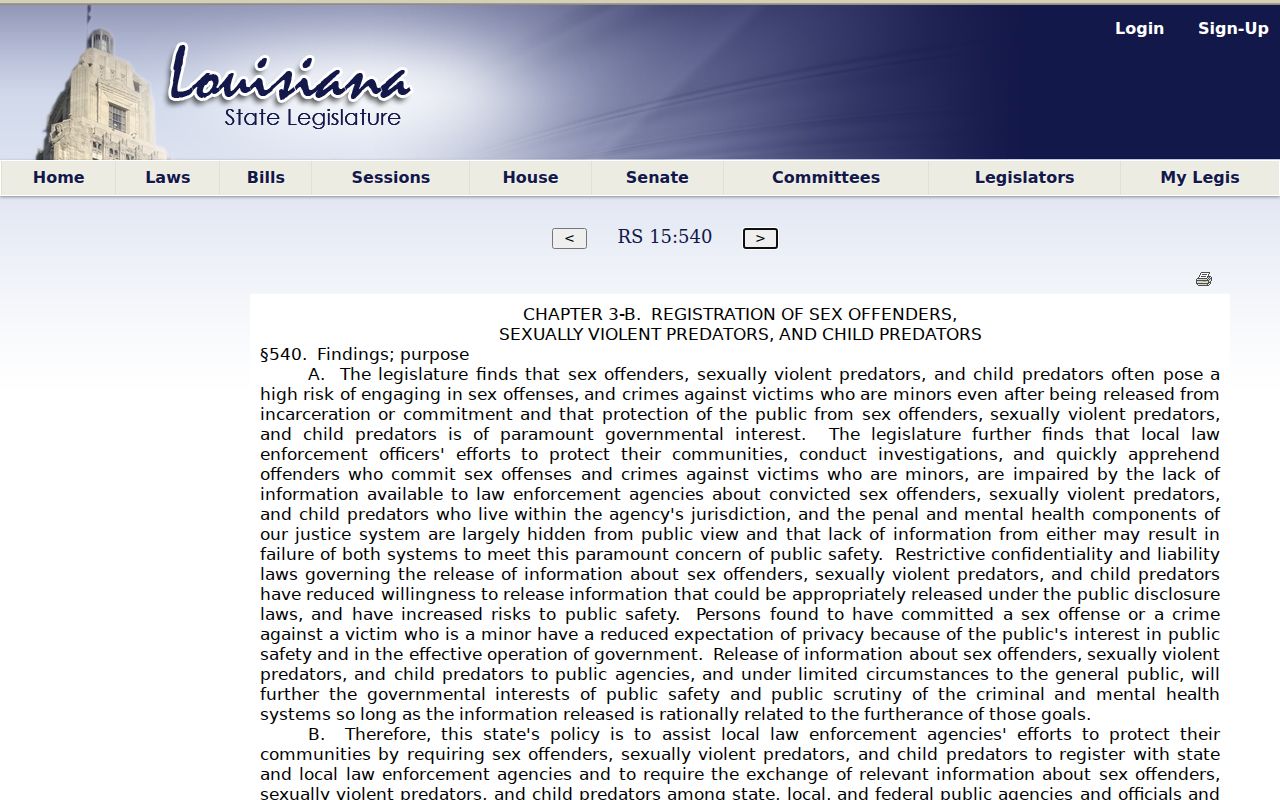
The statute source helps separate information intended for public safety from fields the state keeps out of an ordinary profile.
Louisiana Registration Levels
Louisiana uses three tiers. Tier I covers a registrable offense that is not classified as aggravated or against a minor and generally requires 15 years of registration with annual verification. Tier II covers a statutory sexual offense against a minor and generally lasts 25 years, with verification twice each year. Tier III covers an aggravated offense and generally requires lifetime registration with quarterly verification. The tier shown on a profile therefore signals both the length and the check-in schedule.
| Level / Tier | Duration | Verification Frequency |
|---|---|---|
| Tier I | 15 years | Annual |
| Tier II | 25 years | Semiannual |
| Tier III | Life | Quarterly |
Lafayette Parish Change Notices
A registrant must report a change to the sheriff within three business days. Municipal police also receive registration information when state law assigns them a role. Community notification under Louisiana Revised Statute 15:542.1 generally reaches one mile in rural areas and 0.3 mile in urban or suburban areas. The notice may go to specified homes, businesses, schools, or property owners.
These legal notice zones are not the same thing as the optional LPSO one-mile alert subscription. One is a statutory duty; the other is a free tool a user elects to receive. Reading both rules avoids the false assumption that an online subscription defines every person entitled to notice.
The Louisiana registry entry page is the official starting point for these parish tools.
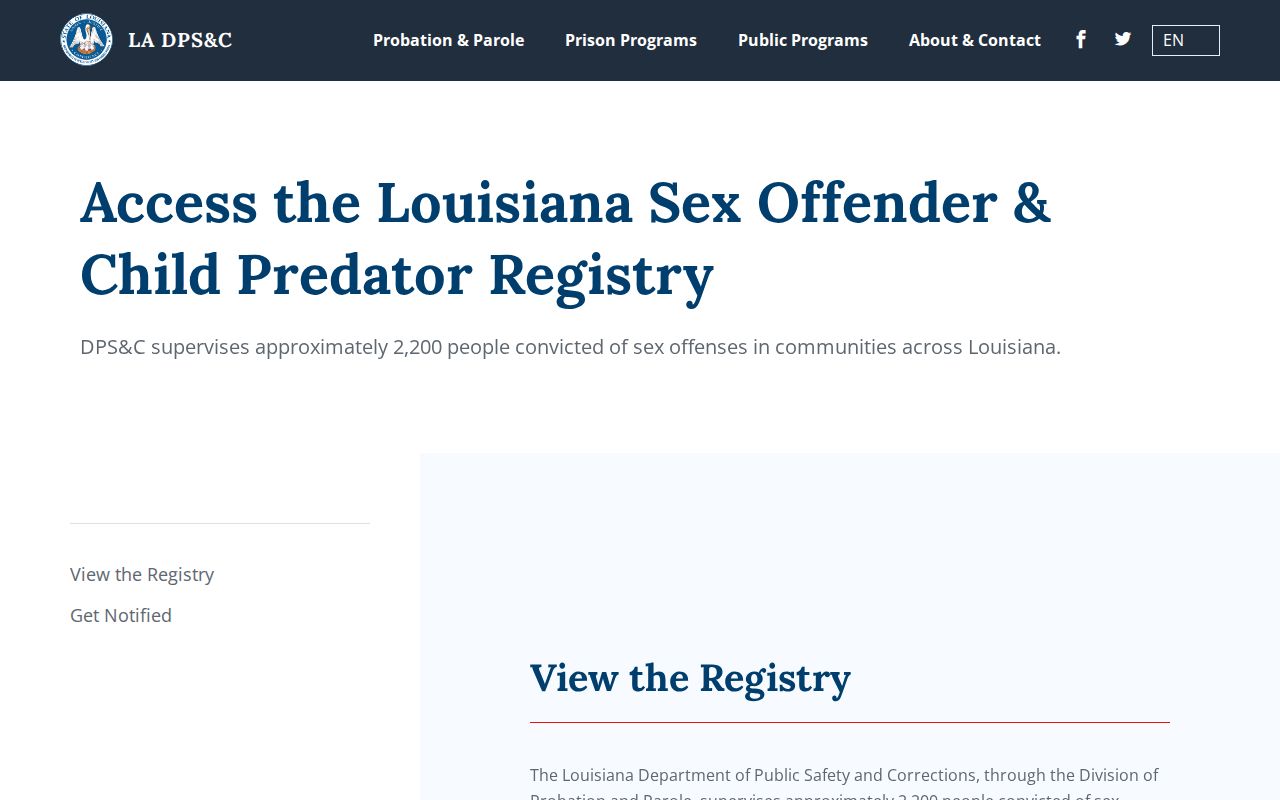
The gateway directs users to the appropriate local registry and keeps parish responsibility clear.
When a Lafayette Address Looks Stale
The state warns that a listed home, work site, or school can lag behind real-world changes. Corrections agencies, courts, sheriffs, and police all contribute information. A delay or error in one source can affect the public entry. Do not treat the absence of a result as proof that no duty exists, and do not confront a person because a map marker appears wrong.
For a questionable Lafayette Parish entry, call the LSP Registry at 1-800-858-0551 on weekdays from 8 a.m. to 4:30 p.m. Central, or call the LPSO Registry at 337-236-5871. Report suspected noncompliance to LPSO. Use 911 only when there is an immediate emergency.
Verification point: A registry listing may be incomplete or late. Confirm disputed details with LSP or LPSO before relying on them.
Cross-State Lafayette Registry Checks
The National Sex Offender Public Website provides the broader search when travel, a move, or an unknown jurisdiction makes a Louisiana-only query too narrow.
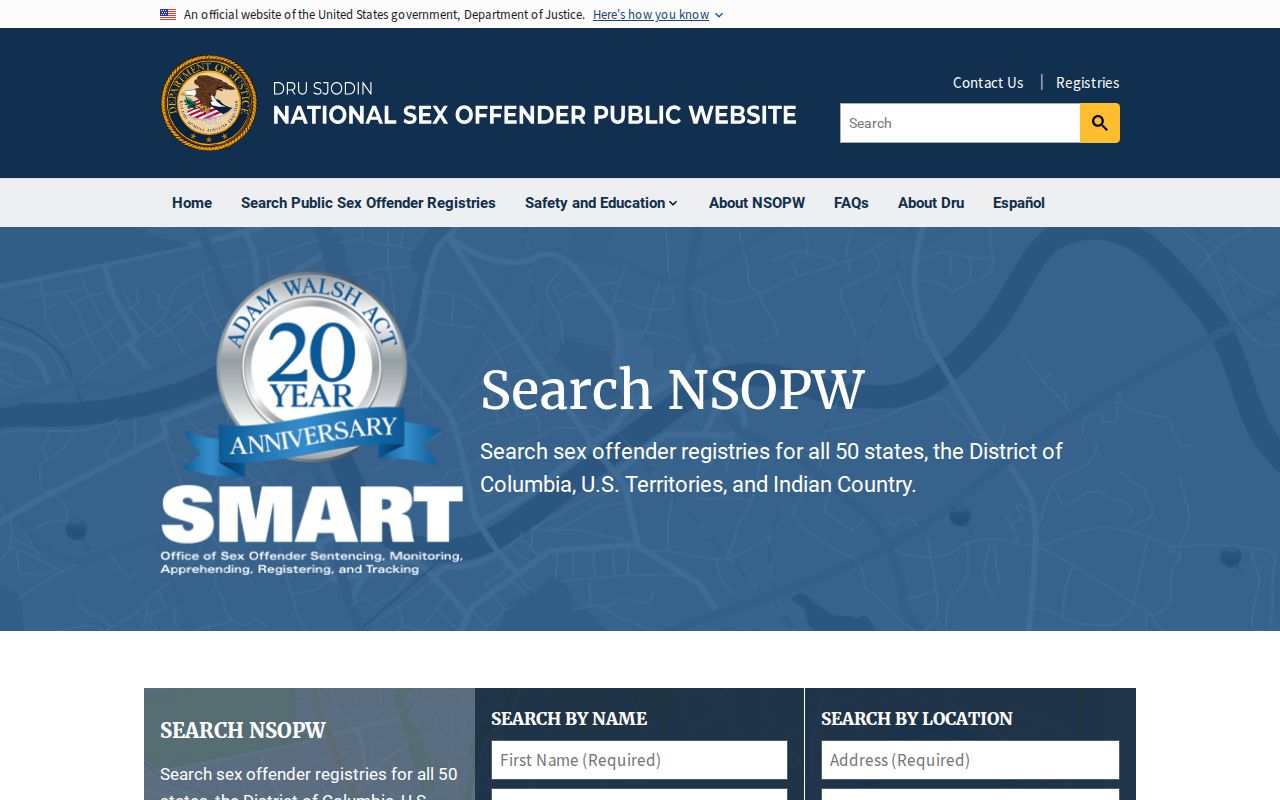
A national match should be opened at its source jurisdiction. That source sets the profile fields, status terms, and update schedule. Return to LPSO when the registered address is in Lafayette Parish.
Lawful Use and Community Notification
Registry access exists for awareness, family safety, and community planning. It does not decide guilt in a new matter, prove that a person is at a listed address, or authorize private punishment. Use the source information to understand reported status and to contact the proper office when something appears wrong.
Threats, intimidation, harassment, and other misuse can lead to criminal prosecution or civil liability. A profile must not become a tool for vigilantism. Keep questions factual and direct compliance concerns to LPSO instead of neighbors or the listed household.
Use Registry Data Lawfully: Louisiana registry information may not be used to harass, threaten, or intimidate a registrant or household. Misuse may bring criminal or civil consequences.